
In Japan, high school kids wear school uniforms. That’s not particularly unusual – school kids in the UK also wear uniforms. But the rules for uniformity among Japanese kids don’t end there.
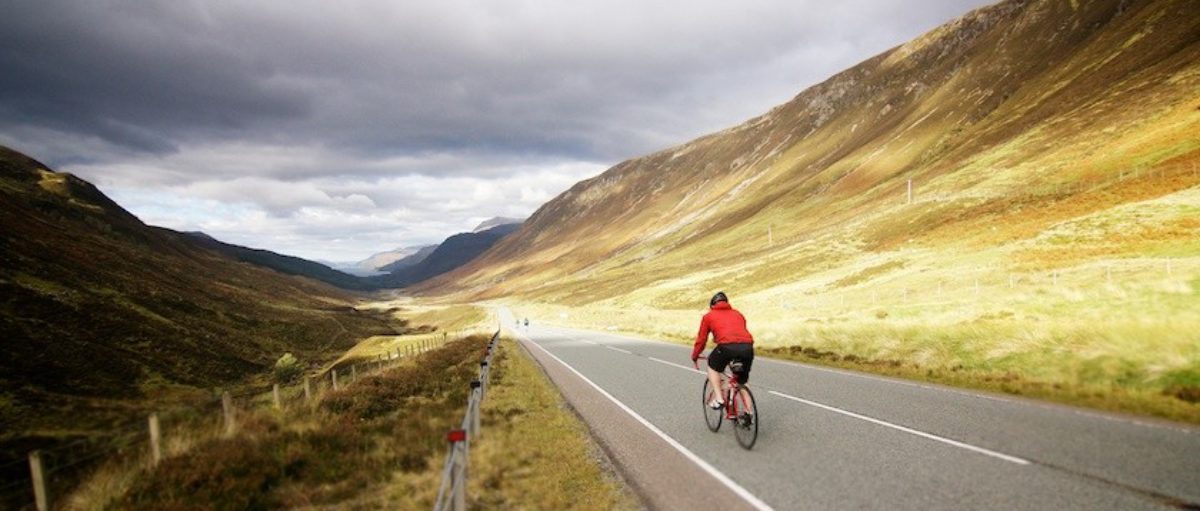
 If a Japanese high-schooler wants to ride a bike to school it can only be a certain type of generic bike, with a carrier on the handlebars, a kickstand and fenders front and back. No other type of bike is allowed. Helmets are optional, and rare.
Japanese school kids are also expected to have several pairs of shoes for use at school, including a pair of soft-soled shoes to wear inside the school, running shoes for gym, and street shoes.
Making kids conform to standards of dress and behaviour seems a good idea. Among other things it helps reduce the number of superficial distinctions between kids, which can only help reduce teenage angst. It also eliminates the distractions of fashion and the pressure to keep up with the cool kids.
On the whole, conformity appears to rate pretty high as a social value in Japan. The same goes for gestures of respect. Bowing, for example. At Nagoya airport I saw airline staff arriving at the departure gate for my flight. As each employee reached the check-in desk they turned and bowed to the room of waiting passengers before starting their work.
At the end of a school swim team practice I watched the student swimmers  walk to the lifeguard stations on either side of the pool and bow to the lifeguards before heading to the change rooms. On highways in Japan, the stylized figure of a person bowing is used on signs to apologize for interruptions caused by roadwork.
I can’t think of any formalized, universal gestures of respect like these in my culture – at least not current examples. Our society values individuality over conformity, which is viewed as negative, and personal versus collective rights and responsibilities.
In Japan preserving social order is an overriding cultural value. This may mean Japan is not culturally suited to producing visionary business disruptors like Steve Jobs and Elon Musk, but then the Japanese are certainly not opposed to adopting and refining useful technologies. As for the benefits of prizing social order, theft in Japan is practically unknown and Japan is arguably the safest country in the world.

 Hikone Castle was built in the early 1600s and is one of just 12 Japanese castles that has not needed reconstruction. Although the foundations and lower walls for Japanese castles are made of stone, unlike castles in Europe most of the lived-in parts were made of wood. In Gifu, where Peter and his family live, the local castle was reconstructed in the 1930s as a national heritage site. About 100 of these castles are scattered around Japan.
 A ryokan is a traditional Japanese inn. My room came furnished with a futon mattress, a chair, a TV (no English programs), a space heater, and a desk raised about 16 inches from the tatami mat-covered floor. There was a chair with no legs, to go with the desk – to sit you extend your legs under the desk. Personal hygiene needs are dealt with down the hall. That was fine by me, but I was puzzled by the communal shower room and bath. The room
 I am visiting an old friend and his family in Japan. Peter teaches English and lives in Gifu with his Japanese wife Miho, who is also a teacher, and their two daughters. I brought my bike with me from Canada with the idea of doing some touring in the region, however, I quickly found the prospect of venturing out onto the highway without firm plans of where I’m going, how I’ll get there (beyond just pedalling) and where I’ll spend each night, very daunting. Not the least barrier is that English is not widely spoken and generally not shown on building signage – which is to be expected. But the Kanji script of the Japanese language means I can’t even recognize common, useful words, like restaurant or hotel.
 acknowledge us as different from Americans. Faced with abysmally low global awareness about Canada in the 60s and 70s, any kind of recognition was welcome. (Yes, there are igloos in Canada. But most of us live in houses – just like you!)
 Since the end of the First World War and the fall of its Ottoman Empire, Turkey has been striving to become a western-style democratic nation. It has a secular constitution and is a rising industrial power with the second highest GDP growth rate in Europe. But both those achievements come with asterisks. The current government is more autocratic than democratic and has changed the constitution to support its preferred modus operandi. (One hallmark of an autocratic regime is to control access to independent sources of information. In Turkey, the government has made Wikipedia “unavailable” to anyone in the country.) And in spite of its economic growth, Turkey still lags far behind Western European countries on GDP per capita.
 the worthiness of scientific achievements in the Islamic world 500-plus years ago, a time when Europe was wallowing in the Dark Ages.
 scholars.
 Those were heady times for Canada. In Pierre Trudeau we had a dynamic prime minister who broke the mould of the fusty political leaders we were used to. We took pride in the international (US) success of musicians like Gordon Lightfoot, Neil Young and Joni Mitchell. And we celebrated the rising stardom – always in the US – of performers like Donald Sutherland, William Shatner and Christopher Plummer, as evidence that we were as good as our American neighbours.
 On the strength of these and other examples of national success it felt as if we were finally emerging from the shadow of the cultural and economic behemoth to our south. And with increased exposure to sunlight our national identity took root and was encouraged to grow through CanCon policies to promote Canadian cultural industries and through public institutions like the CBC. Although to people around the world Canadians talked and acted in ways
  that seemed indistinguishable from Americans, we insisted on our fine points of difference until we finally won the international recognition we always craved: that Canada is not the same as America.
 Just over a hundred years ago Canadian Prime Minister Wilfred Laurier declared the 20
 In Istanbul I was invited to a Nargile cafe. A nargile, or shisha, is a hookah pipe. Smoking shisha is an everyday pasttime for many Turks. The tobacco used for shisha is flavoured – in our case apple-flavoured – and each smoker is given a removable plastic mouthpiece to use for their turn at the pipe. I haven’t smoked tobacco since I was ten and at that time found it too foul-tasting to endure. Shisha, however, is not like that at all. I inhaled deeply and felt a warm, gentle infusion of apple enter my body. Reclining on cushions in the shade of trees at an
  outdoor cafe with people all around; it was an entirely pleasant experience. We spent most of an afternoon talking and smoking and enjoying the social scene of others doing the same. It felt decadent and somehow wrong to my protestent sensibilities to spend an afternoon doing nothing but lounge about. I had to resist the temptation to look at my watch and to think of other, more productive, things I could be doing. Eventually I just ignored the little voice in my head and gave in to the simple pleasure of it all.
 shisha. It comes from a culture many hundreds of years in the making, developed in a pleasant place with a gentle climate where many generations of people have lived, loved, and had families. The patterns of life here are stamped into the cobblestones of the ancient alleyways and etched in the faces of the old and the merchants of the bazaars. There is a depth and richness to daily life in an old city like Istanbul that is missing in North American cities. With our fixation on economic growth, productivity and efficiency we have lost the ability to appreciate the simple pleasure of idle relaxation.
 Alternating with these in equal number are the carpet shops. And that brings me to Ahmed.
 our conversation about the big questions of life. After lunch he led me to the shop’s carpet expert who spent the next hour educating me about carpets in general and the unique qualities of Turkish carpets in particular. We looked at many carpets.
 laureate. Pamuk has lived all his life in the city. In fact he lives today in the apartment building he grew up in, which was built with his grandfather’s money to provide gracious housing in one of the city’s best neighbourhoods for the extended Pamuk family.
 different then from how it is now. He describes a place where, after decades of neglect and disinterest, nothing works properly and all has been left to rot. The majestic ancient fountains are dry, the ornate mansions of pashas and viziers are crumbling and being torn down for banal new concrete apartment buildings, and the Istanbulus have lost their pride.
 modern and efficient, the museums are excellent and the people certainly don’t look downcast or unhappy. A tourist brochure boasts Istanbul is the eighth most visited city in the world, although European tourism has declined signficantly since last year, when ISIS set off a bomb in Taksim Square in the centre of the city.


 The bazaars are covered by a brightly painted domed roof stretching into the distance. Kind of a Byzantine version of West Edmonton Mall. Except none of these shops can fit more than 2 or 3 customers at a time. And there’s no skating rinks.
 In the past year I have had a number of significant adventure travel plans unexpectedly go awry. These include plans many months in the making, with bookings and dates confirmed. I feel it’s worth noting that the collapse of these plans has not been due to me or to faulty planning, but to exigencies affecting my travel companions.
 In one case, my intended companion was my wife. We were married last
 As I have learned, at such times it’s good to have a Plan B. In my case, Plan B has been my daughter Sophie. In both instances above, Sophie stepped into the breach and rescued the situation. It helps that she’s young and has flexibility with her commitments.
 My latest unravelled travel plan involved a trip to Greece to see an old friend whom I haven’t seen in decades. It took me hours to figure out the logistics of getting to the island of Syros, where he lives, from Vancouver, where I live. We confirmed dates and other arrangements, but just as I was about to book my flights I received a message that his situation had changed and he would not be available.